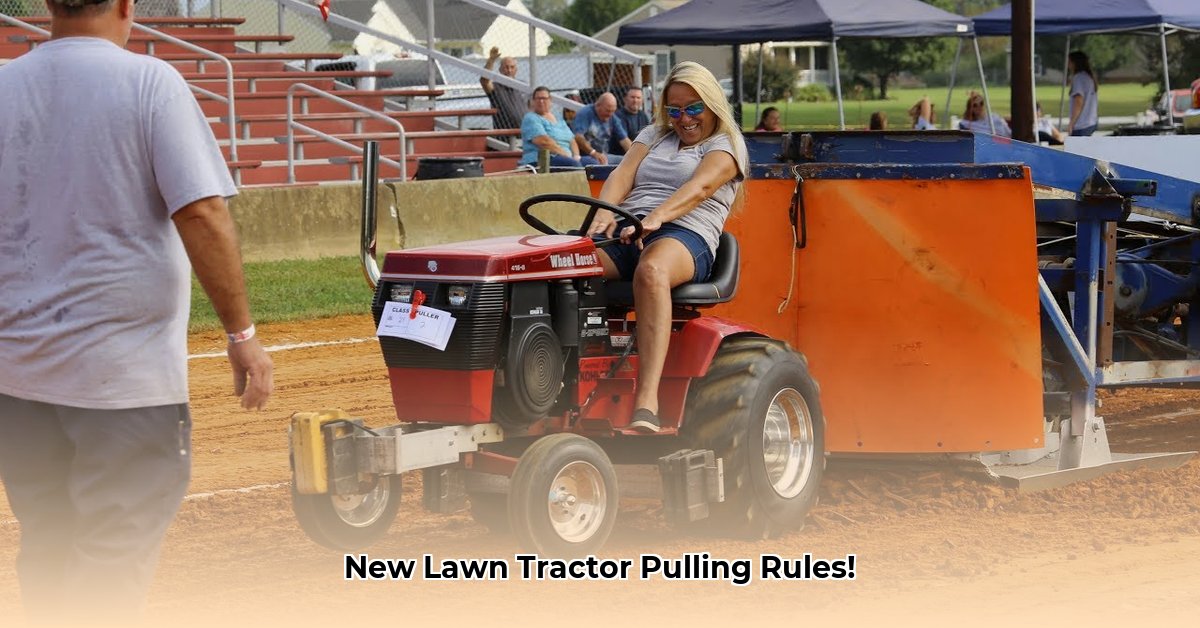
The National Garden Tractor Pulling Series (NGTPS) has announced significant rule changes for the 2024-2025 season, impacting engine specifications, starting procedures, and introducing a new class. These modifications aim to enhance fairness and safety, potentially reshaping competitive dynamics and fostering innovation. For more extreme modifications, check out this site.
Carburetion Revamp: Balancing Competition in Pro Stock Carb
The most significant alteration involves carburetor regulations within the Pro Stock Carb class. The NGTPS is emphasizing "stock-appearing" carburetors, aiming for a more level playing field. While high-performance, custom-made ("billet") carburetors remain permissible, they are subject to strict dimensional limitations. These include precise specifications for venturi size (the carburetor's throat), air controls, fuel jets, and fuel bowl capacity. This standardization seeks to mitigate perceived competitive advantages gained through highly customized carburetors. The Stock Altered class maintains a strict "no billet" policy. Will this approach truly level the playing field, or will it introduce unforeseen challenges? Only time will tell. How will this impact horsepower and fuel economy for competitors?
Engine Placement: The "Hinkle Rule" and Chassis Design Freedom
Another pivotal change is the introduction of the "Hinkle Rule," limiting the maximum distance between the engine and the rear axle to 52 inches. This restriction could significantly impact tractor weight distribution strategies. Interestingly, the requirement for a factory-length frame has been removed, allowing for greater chassis design flexibility. Teams can now experiment with different frame configurations to optimize weight balance. This opens the door for innovative chassis designs and a potential arms race in weight distribution solutions. What creative solutions will teams develop to maximize performance within these new parameters?
Starting Procedures: Clarity, Consistency, and Safety
The NGTPS has clarified starting procedures, implementing a two-attempt rule (with exceptions for failed starts). This standardization aims to promote fairness and consistency throughout the competition, from qualifying rounds to the finals. Critically, jumping the start now results in immediate disqualification, underscoring a renewed focus on safety. Will this stricter enforcement improve the overall flow of races and reduce unnecessary delays?
Pro V-Twin: A New Class Enters the Arena
A new class, the Pro V-Twin (Heads-Up), has been added, establishing a 1050 lb weight limit for both Pro V-Twin classes. This addition aims to attract more participants and promises exciting new competition. What impact will this class have on the overall competitive landscape? Will it attract a significant number of new competitors, or will it simply redistribute existing competitors?
Impact Analysis: A Look at the Stakeholders
The rule changes will inevitably impact various stakeholders within the garden tractor pulling community. The following table summarizes the short-term and long-term effects:
| Stakeholder | Short-Term Impacts (0-1 year) | Long-Term Impacts (3-5 years) |
|---|---|---|
| Pro Stock Competitors | Adapting carburetor designs; potential performance adjustments due to carburetor restrictions. | Development of innovative, compliant billet carburetor designs; refined weight distribution. |
| All Class Competitors | Adjusting engine placement and re-evaluating weight distribution strategies; understanding new chassis options. | Exploration of advanced chassis designs to optimize weight distribution; potentially higher performance through innovative designs. |
| NGTPS Officials | Monitoring competitions; assessing the effectiveness of new rules and addressing any ambiguities. | Fine-tuning rules based on competition data and competitor feedback; potentially further rule refinements. |
| Sponsors & Media | Focusing on the new class and the impact of the rule changes on the competition. | Continued coverage; potential shifts in sponsorship priorities based on class performance. |
Optimizing for Success: Navigating the 2024-2025 Rules
The 2024-2025 NGTPS regulations present both challenges and opportunities. Competitors must understand and adapt to these changes to maintain or improve their performance. Key aspects to consider include the detailed carburetor restrictions in the Pro Stock Carb class, the implications of the "Hinkle Rule," and the strategic possibilities presented by the new Pro V-Twin class. Moreover, careful attention should be paid to the clarified starting procedures and the emphasis on safety.
Key Takeaways:
- Carburetor Design: Meticulous attention to detail is essential for compliant and competitive carb design.
- Weight Distribution: Optimizing weight distribution, considering the "Hinkle Rule" and chassis design freedom, is critical for performance.
- Starting Procedures: Understanding the revised starting procedures and safety protocols is crucial for avoiding penalties.
- New Class Dynamics: Assessing the competitive landscape and potential strategies within the Pro V-Twin class is essential.